When Worship, Identity, and Economy Became One System
By Meridith Curtis
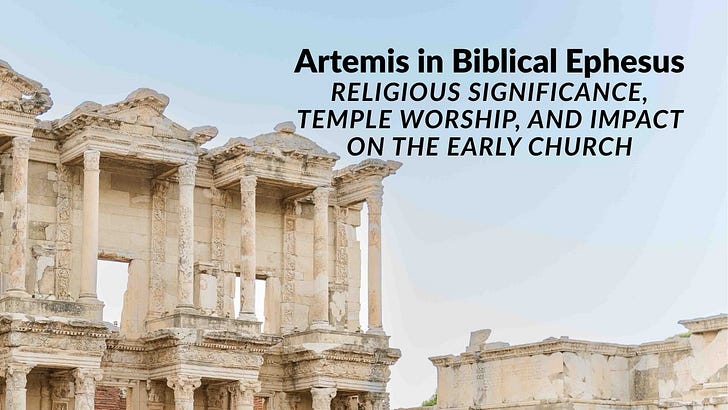
When we read the New Testament, it's easy to assume that "religion" in the ancient world was something separate from everyday life—something private, optional, or symbolic.
But in cities like Ephesus, religion wasn't separate from life.
It was the system that held everything together.
And at the center of that system stood Artemis.
More Than a Goddess: Artemis as the Identity of a City
Artemis (known as Diana in Roman culture) was not a minor deity in Ephesus.
She was the defining presence of the city.
The Temple of Artemis—one of the Seven Wonders of the Ancient World—was more than a place of worship. It functioned as:
- a religious center
- a financial institution
- a cultural symbol
- and a political statement of civic identity
To be Ephesian was, in many ways, to belong to Artemis.
Her image appeared on coins, in festivals, in public processions, and in daily commerce. Her presence was not confined to ritual—it shaped the entire structure of society.
Worship That Shaped the Whole City
In Ephesus, worship was not just personal devotion.
It was embedded into:
- economic systems (temple trade and pilgrimage economies)
- cultural pride (what it meant to be "from Ephesus")
- social belonging (participation in festivals and public life)
- and spiritual worldview (how people understood power and protection)
This means Artemis was not just a religious figure—she was a governing force over imagination, identity, and economics.
Why This Matters for Understanding the New Testament
When the Apostle Paul entered Ephesus, he wasn't simply introducing new religious ideas into a neutral marketplace of beliefs.
He was confronting an entire integrated system of worship, identity, and economic life.
That's why the response in Ephesus was so intense.
When people began turning to Jesus, it wasn't just a private spiritual shift—it had public consequences. It affected livelihoods, challenged civic pride, and disrupted long-established systems tied to Artemis worship.
The gospel didn't merely compete with other "gods."
It redefined what it meant to worship, belong, and live.
The Power of Seeing Scripture in Context
One of the most important habits we can develop when reading the Bible is to slow down and ask:
What was the world actually like when this was written?
Because once we see the world of Ephesus clearly, Scripture begins to open up in new ways.
We start to understand:
- why opposition to the gospel was so strong
- why cities reacted the way they did
- and why the message of Jesus was so transformative
Artemis was not just background detail—she was part of the system the early church was called to faithfully live within and ultimately challenge.
Unlocking the Riches of Ephesians
If you want to go deeper into this letter, I've written Unlocking the Riches of Ephesians, an inductive Bible study on Paul's letter to the Ephesians. This study is designed to help you slow down, observe the text carefully, and uncover the depth of Paul's theological vision for the church. Rather than simply reading Ephesians for information, it guides you to engage it as formation—seeing how every passage shapes identity, community, and life in Christ within a real-world cultural context like Ephesus.
Watch the Teaching
This video explores the religious significance of Artemis in Ephesus and how her worship shaped the world the early church entered.
🎥 Watch here: Artemis in Biblical Ephesus: Religious Significance, Temple Worship, and Impact on the Early Church
<iframe width="100%" height="400" src="https://www.youtube.com/embed/q686JMLQM-8" frameborder="0" allowfullscreen></iframe>Resources & Ways to Connect
📖 Buy Mer's books: https://books.by/meridith-curtis
Our hope is that these studies help you read Scripture with greater clarity, understand the world of the early church more deeply, and follow Jesus with greater faithfulness in your everyday life.
Want to study the biblical world firsthand and be trained for mission? MTC Nashville offers disciple-making training and a residency program in Nashville. Learn more at https://mtc-nashville.com.
Back to Field Notes